Outline History of Nihon Karate-do Shotokai and Shotokan (1921–2025)
The authoritative chronology and philosophical outline of Nihon Karate-do Shotokai and the Central Headquarters Dojo Shotokan from 1921 through the present day
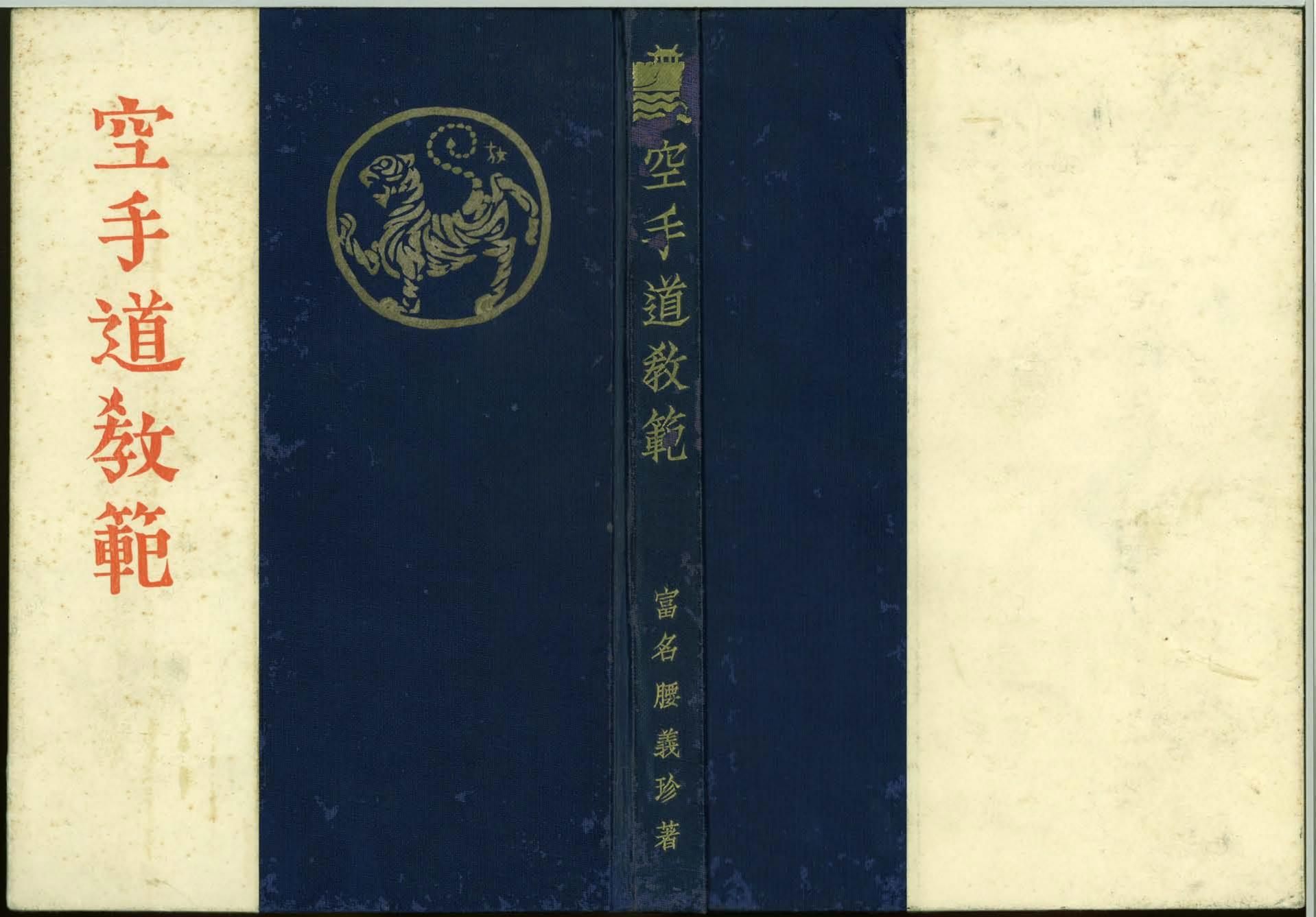
First Edition of Karate-do Kyohan (1935): Slipcase front with monumental calligraphy brushed by Tsunejirō Uemura (Wadō) and blue cloth spine with the embossed Shotokan Tiger.
Outline History of Nihon Karate-do Shotokai & Shotokan
The Official Chronology (1921 – 2025) and Core Philosophy of the Central Headquarters Dojo
Primary Source Reference:
This chronological and philosophical record is drawn directly from the official publication "There Is No First Strike in Karate-do: English Translation of the Nihon Karate-do Shotokai Booklet" (Published May 16, 2023, Nihon Karate-do Shotokai Central Headquarters Dojo Shotokan, 2-1-7 Kikukawa, Sumida-ku, Tokyo, Japan).
• Download Official English PDF Document
• View Official Announcement on Shotokai.jp (News #5329)
1. Master Gichin Funakoshi's Statement of Purpose
When Master Gichin Funakoshi brought karate from Okinawa to mainland Japan, he defined its foundational purpose not as sport, spectacle, or brute conflict, but as an austere path of spiritual cultivation (Shin-Gi-Tai):
"Karate-do is a martial art for cultivating noble character, iron discipline, and mutual respect. The hands and feet can deliver lethal force; therefore, self-control is paramount. True karate begins with courtesy and ends with courtesy (Rei). There is no first strike in karate (Karate ni sente nashi)."
2. Chronological Milestones (1921 – 2025)
| Year | Milestone & Historical Event |
|---|---|
| March 1921 | Crown Prince Hirohito (later Emperor Showa) visits Okinawa and observes a historic karate demonstration commanded by Master Gichin Funakoshi in the Great Hall of Shuri Castle. |
| May 1922 | Master Funakoshi travels to Tokyo to demonstrate Okinawan Tōde at the First National Physical Education Exhibition organized by the Ministry of Education. Renowned artist Hoan Kosugi becomes his first registered student. |
| June 1922 | Jigoro Kano, founder of Judo, invites Funakoshi to demonstrate karate at the Kodokan. Demonstrations also held at the Tabata Poplar Club. |
| Nov 1922 | Publication of Ryūkyū Kenpō Karate, the first modern book in karate history, with the cover emblem brushed by Hoan Kosugi. |
| 1924 | The first collegiate karate club is formally established at Keio University. |
| 1926–1930 | University clubs multiply rapidly across Tokyo: Waseda, Tokyo Imperial University, Takushoku, Chuo, Meiji, and Gakushuin. Takeshi Shimoda serves as Funakoshi's chief assistant. |
| 1934 | Takeshi Shimoda passes away at age 35 after a demanding national tour. Master Funakoshi’s third son, Yoshitaka (Gigō) Funakoshi, assumes technical leadership. |
| Oct 1935 | Publication of Master Funakoshi's magnum opus, Karate-do Kyohan (The Master Text). The monumental front-cover calligraphy is brushed by disciple and master calligrapher Tsunejiro Uemura (Wadō). |
| 1936 | The association Shotokai (松濤會 - Shōtō's Association) is formally founded by senior disciples and university alumni to administer and fund Funakoshi’s teachings. |
| Jan 29, 1939 | Inauguration of the first dedicated dojo building, named Shotokan (松濤館), in Zoshigaya, Toshima-ku, Tokyo. |
| Sept 20, 1941 | Yoshitaka Funakoshi completes the codification of Ten no Kata (Omote and Ura) and the foundational Taikyoku katas (1–3), revolutionizing karate biomechanics. |
| April 1945 | The original Shotokan dojo building in Zoshigaya is completely destroyed during American B-29 incendiary air raids over Tokyo. |
| Nov 24, 1945 | Master Yoshitaka Funakoshi passes away at the age of 39 from severe pulmonary tuberculosis. |
| April 26, 1957 | Supreme Master Gichin Funakoshi passes away in Tokyo at age 88. |
| Feb 24, 1958 | Eldest son Giei Funakoshi (2nd President), Shigeru Egami (Chief Instructor), Genshin Hironishi, and Tsunejiro Uemura legally incorporate Nihon Karate-do Shotokai as a nonprofit public-interest association with the Tokyo Metropolitan Government. |
| 1961 | Giei Funakoshi passes away; senior directors maintain collective leadership and university club ties. |
| Nov 23, 1976 | Dedication and formal opening of the newly constructed Central Headquarters Dojo "Shotokan" in Kikukawa, Sumida-ku, Tokyo, spearheaded by Genshin Hironishi. |
| Jan 8, 1981 | Master Shigeru Egami passes away. Master Genshin Hironishi assumes leadership as 2nd Head of Shotokan and Shotokai President. |
| 1995 | Master Jotaro Takagi is appointed 3rd Head of Shotokan and Chairman of Nihon Karate-do Shotokai. |
| 1995–1996 | Comprehensive reconstruction and modernization of the Sumida-ku Central Headquarters Dojo building. |
| Dec 1999 | Master Genshin Hironishi passes away at age 86. |
| 2016 | Master Yoshinori Takita is appointed 4th Head of Shotokan and President of Nihon Karate-do Shotokai. Master Jotaro Takagi passes away. |
| 2022 | Centennial Celebration commemorating 100 years since Gichin Funakoshi’s mainland transmission of Karate-do (1922–2022). |
| May 16, 2023 | Nihon Karate-do Shotokai publishes the official English booklet "There Is No First Strike in Karate-do", renewing worldwide international communication. |
3. Core Philosophy: Why Karate-do Has No Contests
As articulated by Master Jotaro Takagi in the official Hombu booklet, Nihon Karate-do Shotokai remains one of the few global martial traditions that steadfastly rejects sporting matches, weight-class tournaments, and referee points.
The Inherent Dilemma of the Decisive Blow
In true Karate-do, techniques are trained with full commitment (kime) targeting vital anatomical points (kyusho). In a real confrontation, an authentic strike aims to be instantly decisive. If such force were unleashed in a contest, serious injury or fatality would be inevitable. Consequently, sporting tournaments must enforce rules that prohibit real impact, encourage pulled punches, and reward superficial tagging.
Deterioration into Point Tagging
When athletes train exclusively to score points under referee rules:
- They sacrifice rooted posture and stability for bouncing footwork.
- They develop reckless lunges that would be suicidal in real combat.
- They prioritize speed of touch over penetrative mass, body unification, and true martial power.
Spiritual Pollution and the Loss of Rei
More critically, sports tournaments foster an egotistical mindset obsessed with winning, prestige, and dominating opponents. Master Funakoshi warned that the primary adversary in Karate-do is one’s own internal weakness, vanity, and fear.
In Shotokai:
- Kata is the supreme crucible of lifelong practice, uniting mind, breath, and body.
- Kumite (partner practice) is conducted not to defeat the partner, but to develop mutual harmony, timing (ma-ai), and sincere martial awareness without malice.
4. The Global Legacy Today
Today, Nihon Karate-do Shotokai operates from its Central Headquarters Dojo in Sumida-ku, Tokyo, guiding over 25 prefectural branches, university clubs (Chuo, Gakushuin, Senshu, Seijo), and sister associations spanning Europe (Spain, Portugal, UK, Italy, France), North America, and South America (Chile). It stands as an unbroken bridge to the orthodox budo of Gichin and Yoshitaka Funakoshi and Shigeru Egami.
