Kokutsu-Dachi & Knife-Hand Blocks — Back Stance Mechanics
Technical mechanics of Kokutsu-Dachi (Back Stance), centering weight distribution on the rear leg (70%), and the execution of fundamental knife-hand blocks: Shuto-Uke and Shuto-Barai
Kokutsu-Dachi • Back Stance & Knife-Hand Blocks
Shotokai Karate Budo • Technical Descriptions • Stances & Blocks
A predominantly defensive posture, Kokutsu-Dachi shifts the center of gravity onto the rear leg, which bears approximately 70% of the total body weight.
The heels are aligned along a common line, but the feet point in perpendicular directions: the front foot aims straight toward the opponent, while the rear foot turns out at approximately 90 degrees.
Mastering this stance presents real challenge: both knees must exert outward tension, and the pelvis must be firmly tucked and supported from beneath to prevent the hips from collapsing when absorbing the shock of an incoming attack. Although the base of support is narrower than Zenkutsu-Dachi, presenting the hips and torso in profile (hanmi) has the decisive advantage of exposing a substantially smaller target area to the adversary.
Stepping & Transition Mechanics
- While maintaining an even hip height, execute a swift, decisive hip transition the moment the two feet pass each other during stepping.
- Practice moving both forward and backward, always ensuring the weight remains firmly anchored in the rear leg and the trunk remains perpendicular to the floor.
- Driving the rear knee firmly backward at the instant of completion is essential for stability.
Blocks in Kokutsu-Dachi
Shuto-Uke • Knife-Hand Block
One of the most widely practiced techniques across the classical kata. Its outward trajectory is slightly descending; upon completion, the upper arm and forearm form an angle of approximately 90 degrees, with the fingertips level with the shoulder.
- The retracting hand (hikite) settles open at the solar plexus, helping draw the torso into complete profile (hanmi).
- Drawing the shoulder blades (scapulae) together expands the chest and gives unyielding firmness to the block without locking into tension.
- Precise alignment between the elbow and forearm, an upright spine, and an alert, relaxed chest are indispensable prerequisites for an effective Shuto-Uke.
Shuto-Barai • High Knife-Hand Sweep
A sweeping deflection against attacks aimed at the middle and upper zones executed with the open knife-hand.
- Like Ude-Uke, the path originates near the opposite hip.
- With the hand open, it sweeps upward and outward in an arc, finishing with the arm angled at 90 degrees or slightly wider, with the elbow level with the shoulder.
- The opposite fist chambers firmly at its corresponding hip.
Photographic Reference
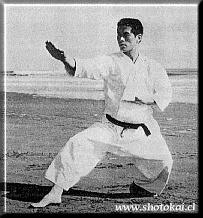 Shuto Uke • Aoki Sensei
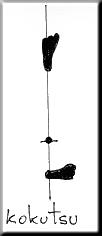 Kokutsu Dachi • Side View
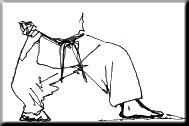 Kokutsu Dachi • Foot Alignment
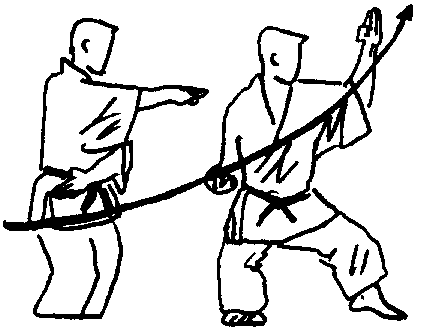 Shuto Barai • Motion
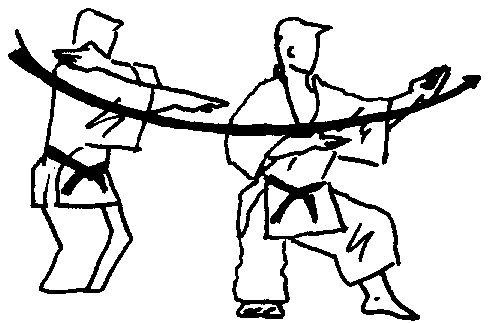 Shuto Uke • Motion
